

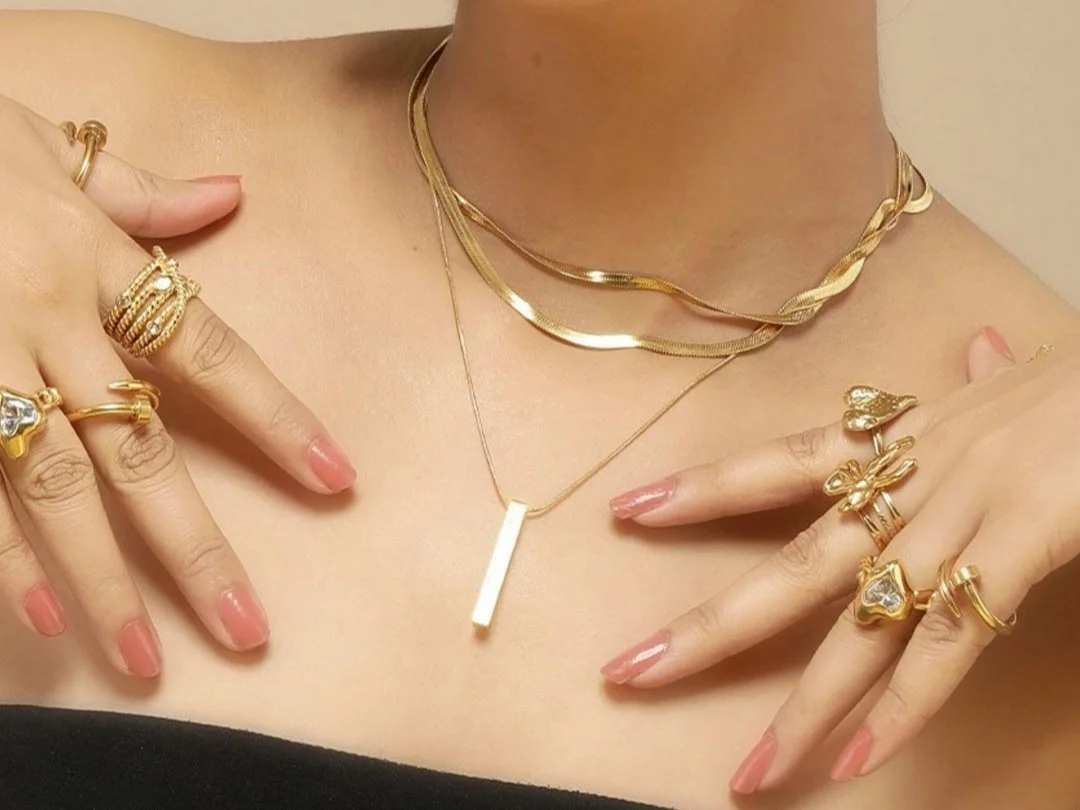
Here’s the good news first: learning how to care for solid gold jewelry is less work than you think. Real gold has no coating to wear off and no base metal underneath waiting to turn your skin green. It’s the low-maintenance luxury of the jewelry world. Solid 14K gold jewelry is built to be lived in: showered in, slept in, worn on repeat. This guide covers the simple routine that keeps it bright and yours for years.
How to Care for Solid Gold Jewelry: Start With the Metal
Does solid gold tarnish or turn your skin green? Solid 14K gold doesn’t tarnish, and it’s very unlikely to turn your skin green. Those problems come from the cheap metals hiding inside plated, gold-filled, and vermeil pieces. Once the thin gold layer wears through, the base metal underneath reacts with your skin. Solid gold has no layer to lose.
How they compare:
| Type | What it is | Tarnish / green-skin risk | Care |
| Solid 14K gold | Gold throughout | Very low | Soap and water |
| Gold-filled | Thick gold over a base-metal core | Low until it wears | Don’t overclean |
| Gold-plated | Thin gold over base metal | Higher as it wears | Minimal; layer wears easily |
| Vermeil | Gold over a sterling base | Moderate as it wears | Gentle only |
Any dullness on real gold is usually just a film of skin oil, lotion, or sunscreen. A quick clean brings it back.
One thing worth knowing: 14K gold is 58.3% pure gold, and the rest is alloy. Nickel is a common alloy metal across the industry, which is why some “gold” jewelry still bothers sensitive skin. Gold alloyed without nickel doesn’t have that problem, so the metal itself never works against you. If sensitivity is your worry, hypoallergenic gold jewelry in solid 14K is the easy answer.
The Safe At-Home Cleaning Method
How do you clean solid gold jewelry at home? Soak it for 10 to 20 minutes in a bowl of warm water with a drop of mild, fragrance-free dish soap. Brush gently around settings and chain links with a soft baby toothbrush, rinse in a bowl or over a covered drain (you’ll only forget once), pat dry with a lint-free cloth, and let it air-dry fully before storing. That’s the whole method. No drawer of special products required.
How often? For daily pieces, wipe after wear and deep-clean every two to four weeks. Clean sooner for chains and rings that meet sunscreen, sweat, and lotion. Occasional pieces need attention only when they look dull.
What to skip: toothpaste, baking soda, vinegar, bleach, ammonia, and stiff brushes. They promise a faster fix and instead leave fine marks or wear down settings and softer stones. Ultrasonic cleaners suit solid gold with securely set natural diamonds, but keep pearls, opals, turquoise, and glued settings out. When soap and water don’t revive a piece, the fix is usually a jeweler, not something harsher.
Can You Shower or Sleep in Solid Gold Jewelry?
Yes. Solid gold handles water, steam, sweat, showers, and a full night’s sleep. No need to baby it. Water isn’t the enemy; residue is. Soap, shampoo, and conditioner leave a film that dulls shine over time, so if you wear pieces around the clock, just rinse, dry, and clean a little more often.
A couple of habits make everyday wear effortless. Put jewelry on last (after lotion, sunscreen, perfume, and hair products have dried) so nothing builds up underneath. You don’t need to take gold off for the gym or the pool, though you might set a ring aside for heavy lifting or gardening, to spare the stones a hard knock. And give your pieces a home: a little dish on the nightstand beats the edge of the sink every time. Low-profile pieces like flat back earrings and 14k gold huggie earrings are made for exactly this kind of all-day, all-night wear, and gold bands love a daily rhythm.
When Jewelry Irritates Your Skin
Even real gold can feel itchy when sweat, soap, sunscreen, and lotion get trapped between metal and skin. Usually it’s the buildup, not the gold. Residue collects in chain links, under rings, and around earring backs. The fix is cleaner contact: rinse, dry the area, and give pieces the occasional break.
Green marks are a different story. They typically point to copper, worn plating, or non-solid materials rather than solid 14K gold. If a piece keeps leaving a mark or a rash that cleaning and drying don’t solve, treat it as a skin or allergy question, and look hard at whether it’s actually solid gold. Persistent irritation deserves a doctor’s read, not just a polish.
Storing and Maintaining Solid Gold for the Long Haul
Long-term care for solid gold is mostly prevention, and it comes down to four habits: storing pieces separately, inspecting them as you clean, knowing when to polish versus clean, and calling in a jeweler for anything structural. Each one protects a different part of the piece: the finish, the settings, and the stones.
Store pieces separately in soft pouches or a lined box, and lay chains flat so they don’t tangle. While you clean, do a quick inspection: check clasps, posts, and prongs, and watch for stones that feel loose or finishes that look dull no matter what.
Know the difference between cleaning and polishing. Cleaning lifts residue; polishing buffs away a whisper of surface metal to refresh fine marks, so clean often and polish rarely. See a jeweler for valuable or vintage pieces, gemstone settings, persistent discoloration, heavy buildup, a broken clasp, or a loose stone. Treat solid gold less like a museum piece and more like something worth keeping, because it is.
Caring for solid gold isn’t a chore; it’s a rhythm: gentle habits that keep it bright and ready for real life. Give it that, and your gold stays worn, and loved, for years.
Frequently Asked Questions
How often should you clean solid gold jewelry? For daily-wear pieces, a quick wipe after wear and a deeper soap-and-water clean every two to four weeks. Clean sooner if a piece meets a lot of sunscreen, sweat, or lotion, or starts looking dull.
Can you use a jewelry polishing cloth on solid gold? Yes. A soft jewelry polishing cloth is perfect for a quick shine between washes. Use light, gentle passes, and skip rougher cloths or paper towels, which can dull a polished surface.
Is 14K solid gold hypoallergenic? 14K gold is mostly pure gold blended with alloy metals. When that alloy is nickel-free, the gold stays comfortable against sensitive skin, with nothing in the metal working against you. Nickel-free isn’t automatic, so it’s worth confirming.
Can solid gold jewelry go in an ultrasonic cleaner? Plain solid gold and securely set natural diamonds usually do fine. Keep pearls, opals, turquoise, and glued or antique settings out, since vibration can loosen them. When in doubt, stick to soap and water.
