

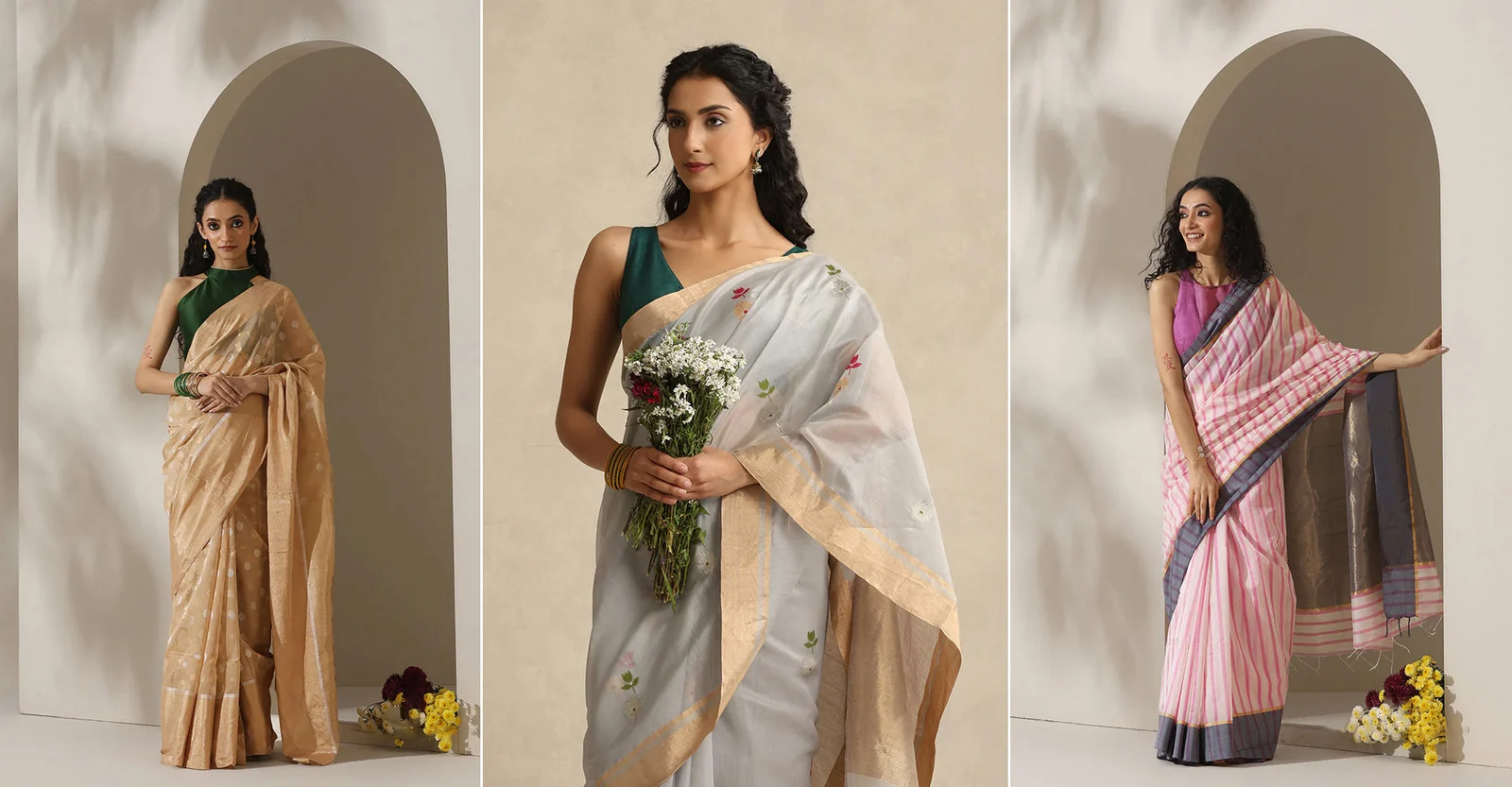
Buying a saree is not only about choosing a colour you love. The fabric decides how it falls, how much time it takes to drape, and how comfortable it feels after several hours. A saree that suits the occasion but fights you at every pleat is unlikely to become a favourite. Start with fabric and handling, then move to border, blouse and styling.
Quick Style Reference
| Option | Good For | Try It With / Check |
| Cotton | Day events, warm weather | Crisp pleats |
| Georgette | Easy movement | Soft drape |
| Net | Dressier events | Lining and finish matter |
| Plain woven saree | Versatile occasions | Statement blouse |
Begin With How You Want the Saree to Fall
If you are looking at Net Sarees, pay attention to softness, transparency, and the weight of embellishment. Net sarees can create a dressy, light look, but the border and work affect how easily it sits. Check whether the saree needs a particular petticoat or extra care to drape neatly.
Think About the Hours You Will Wear It
Plain sarees for a short ceremony can be more elaborate than one you plan to wear from afternoon until late evening. Weight at the border, scratchy embroidery, and stiff fabric become more noticeable with time. Comfort matters, especially if you expect to sit, walk, or travel between venues.
Keep One Simple Saree That Lets the Blouse Do the Work
A Plain Sarees are useful because it gives you room to change the look through the blouse, jewellery and drape. A plain base can feel minimal with a matching blouse or more festive with contrast, texture or embroidery. That flexibility often makes simple sarees surprisingly hardworking.
Check the Blouse Plan Before Checkout
Do not wait until the saree arrives to think about the blouse. Consider colour, sleeve length, neckline, and whether a matching piece is included. If tailoring is needed, leave enough time. A saree you love can still become stressful when the blouse is an afterthought.
Care Requirements Should Match Your Patience
Some sarees need dry cleaning, careful folding, or separate storage to protect delicate work. Others are easier to maintain. Read the care information and be realistic. A fabric that suits your lifestyle will be worn more often than one that feels too precious to handle.
Practice the Drape Before the Event
If the saree is for a specific occasion, do one trial drape before the actual day. This shows whether the fabric needs extra pins, whether the pleats stay sharp, and how the border behaves at the shoulder. It also gives you time to adjust the petticoat, shoes, and blouse instead of finding everything out at once. Take a few steps and sit down during the trial. A saree can look beautiful in a still photograph and feel very different in motion. A short practice run makes the final outfit calmer and usually more comfortable.
To Wrap Up
The right saree is the one that looks good and behaves well for the event you have in mind. Choose the fabric by drape and comfort, plan the blouse early, and check care requirements before buying. Once those practical points are settled, colour, border, and styling can be enjoyed without turning the outfit into extra work.
FAQs
- Which fabric is easiest for a first saree?
Cotton or a cotton blend. It holds pleats crisply and grips rather than slipping, which makes draping considerably easier than georgette or chiffon.
- How should I store a worked saree?
Folded in muslin rather than plastic, and refolded along different lines every few months so a permanent crease does not set at the fold line.
- Why does net show more than other fabrics?
Because net is transparent by construction, layered over a lining to create volume rather than to drape close to the body. That means the lining and petticoat underneath are part of the visible outfit, not hidden by it, so it’s worth checking both before ordering.
- Is a plain saree less interesting than a printed one?
Not really it just shifts the focus. With no print or embroidery competing for attention, the blouse and jewellery lead instead, so the same plain saree can look quite different depending on what it’s paired with.
- Does the shade of the petticoat matter if it is hidden underneath?
Yes, especially if the fabric is a light one. If the petticoat is of the same shade as the saree, it will not show through but if it is contrasting, it can change the way the whole drape looks.
